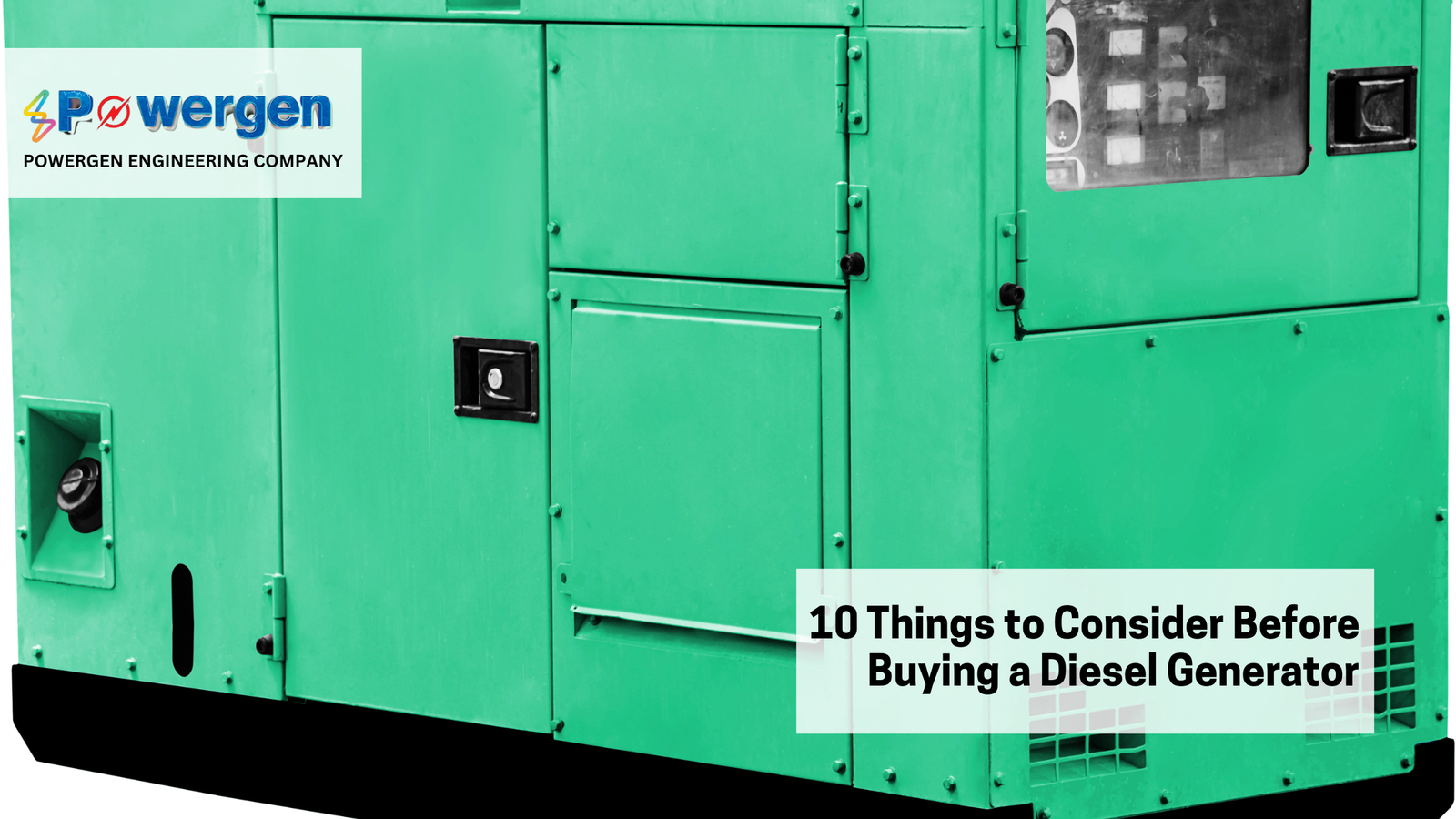
10 Things to Consider Before Buying a Diesel Generator
The diesel generator is one of the necessary pieces of equipment for various companies, organizations, commercial buildings, hospitals, construction sites, and many others that need backup power. It is not easy to choose an appropriate generator based only on its capacity and price. Some factors such as power needs, fuel consumption, applications, installation, maintenance, safety, and after-sales services may affect the performance of the generator.
Power outages can interrupt the process of manufacturing, interrupt the working process, damage sensitive equipment, and reduce the level of productivity. The right choice of diesel generator will allow you with backup power.
It is crucial to identify your power needs before buying a generator. The list below includes ten major factors to take into account when purchasing a diesel generator.
1.Calculate Your Power Requirement
The first and foremost thing is to calculate how much power you require. Overloading a small-sized generator may cause a problem for your facility, whereas a large generator may lead to unnecessary expenditure.
Make a list of all the machines, electrical appliances, lights, air conditioners, and pumps that would need back-up power in case of a power outage.
Take into account the normal power requirement as well as the start-up power requirement for certain electrical appliances like motors, compressors, and pumps.
Generally, the generator output is expressed in kVA, so the calculation of your total load will help you determine the right size for your facility.
For instance, a small commercial establishment would have a different requirement from a manufacturing plant or a hospital. PowerGen manufactures generators of different capacities.
2.Selecting the Appropriate Generator Capacity
Once you have determined your power needs, choose the appropriate capacity of your diesel generator. Do not opt for a generator just because another company utilizes the same capacity.
Factors determining appropriate generator capacity include:
- Total connected load
- Maximum load during operation
- Current required to start the motors
- Type of electrical equipment
- Backup time required
- Plans for future expansion
- Operation conditions
It is also recommended to maintain a margin for future load increase. However, opting for a very high capacity generator will result in inefficiency and wasted fuel.
An expert generator supplier will help you determine an appropriate kVA for your generator.
3.Take into Account How the Generator Will Be Used
Various uses have various needs for the generator.
Think about how often the generator will be used.
Typical use includes:
- Manufacturing industries
- Health care facilities
- Commercial buildings
- Construction sites
- Residential properties
- Agri-facilities
- Infrastructure projects
- Remote locations
- Warehouses and factories
PowerGen offers diesel generators to the manufacturing industry, infrastructure, construction, health care facilities, commercial buildings, residential properties, agriculture, mining, oil and gas, and remote locations.
4.Fuel Consumption Check
The consumption of fuel is an essential element that should be considered while buying a diesel generator, especially by companies which will have to run the generator often or for a long time.
Do not take into account the cost of purchasing a generator alone. Take into consideration the total running cost of the generator in terms of fuel consumption, servicing, replacement of parts, lubricants, and maintenance.
Request from the manufacturer the fuel consumption data under different load conditions. Running the generator efficiently can help keep down the cost of operation.
It is also very important to make sure that the generator is never operated under unsuitable loads.
5.Assess Generator Components and Construction
The construction of the engine, alternator, control unit, cooling system, fuel system, and other components of the generator may impact its performance reliability.
Before buying the generator, check the following:
- Engine brand
- Alternator specifications
- Control panel
- Cooling system
- Fuel system
- Safety measures
- Noise suppression equipment
- Overall quality of the build
- Availability of genuine spare parts
An efficient generator is built in such a way that it works reliably in the environment where it is supposed to work.
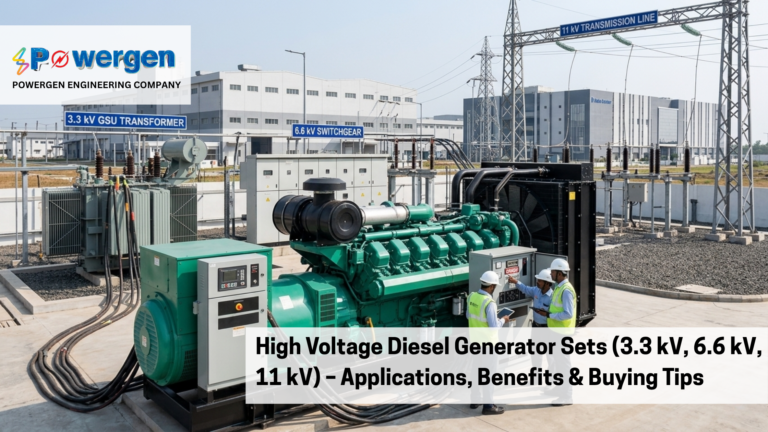
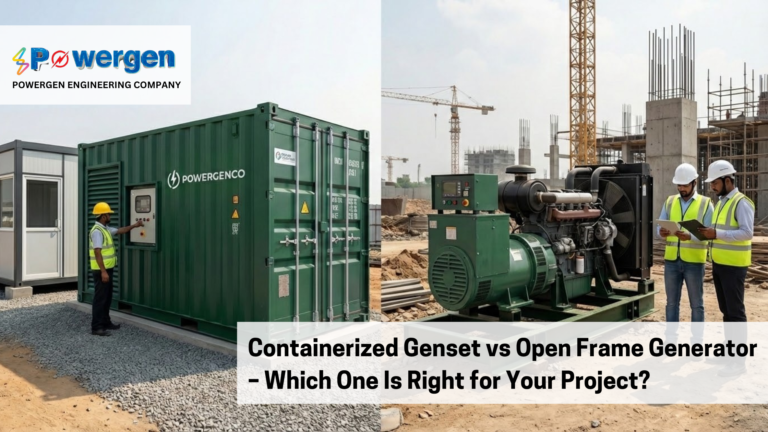
PowerGen produces various configurations of generators, such as silent generators, open-type generators, containerized generators, and high-voltage generators.
6.Consider Noise Levels
Noise levels can play a crucial role in determining the suitability of a generator installation close to residential zones, offices, hospitals, schools, hotels, and other occupancy types.
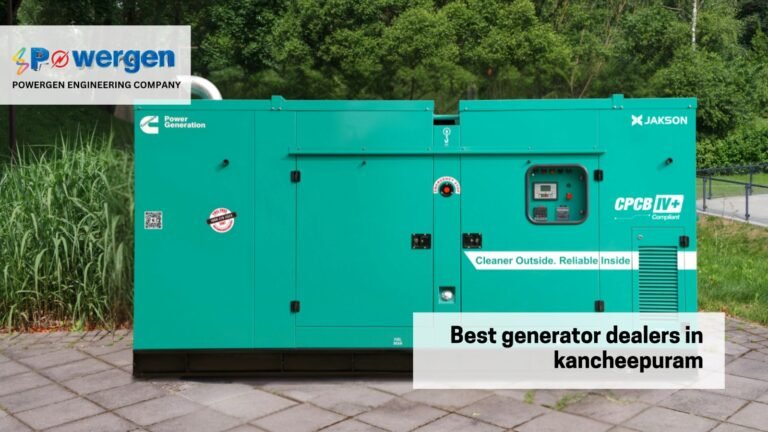
A quiet diesel generator fitted with an acoustic enclosure will prove useful in minimizing noise levels when compared with an open type of generator installation.
Prior to choosing a silent generator, ensure that the design of the acoustic enclosure, the ventilation system, the exhaust system, and noise specifications for your installation are appropriate.
The correct configuration is highly dependent on the installation location of the generator.
7.Check Control Panels and Automated Systems
Modern generators can offer a wide range of automatic and monitoring systems that facilitate the ease of operation.
In accordance with your requirements, some of the options available include:
- Automatic mains failure capability
- Generator start-stop
- Voltage measurement
- Frequency measurement
- Load protection
- Low oil pressure protection
- High coolant temperature protection
- Emergency shutdown capability
- Operating hours metering
Automatic control features can be very beneficial to those facilities which require immediate backup power when there is a failure of electricity supply.
PowerGen offers standard and synchronization control panels for various power applications.
8.Assess Installation Needs
Purchasing the generator is not the final step. It is equally vital that it be properly installed.
Prior to installing your generator, it is important to assess:
- Installation space
- Ventilation
- Exhaust configuration
- Fuel storage
- Electrical connection
- Earthing
- Foundation needs
- Cable layout
- Maintenance access
- Noise issues
- Safety needs
For indoor installations, ventilation and heat dissipation are especially significant. For outdoor installations, environmental conditions must be taken into consideration.
Professional installation and testing will assist you in ensuring that your generator runs according to specifications.
9.Check Maintenance and Post-sale Support
Since a generator is an asset for a long period of time, post-sale support needs to be taken into consideration when making the buying decision.
Inquire from the supplier on:
- Warranty details
- Maintenance of the unit
- Annual Maintenance Contracts (AMC)
- Availability of spare parts
- Supporting services time
- Technical support
- Installation and commissioning
- Emergency breakdown support
Maintenance will give you the opportunity to spot any issue that might cause a surprise stoppage of your generator in the future.
Maintenance operations could involve such things as checking the engine’s oil, coolant, filters, batteries, belts, hoses, electrical connections and many others depending on the manufacturer’s recommended maintenance routine.
10.Compare Total Cost of Ownership
The least expensive generator isn’t always the most economic choice. Before making your choice, take into account the total cost of ownership.
This includes:
- Purchase price
- Fuel consumption
- Installation cost
- Maintenance costs
- Replacement parts
- Consumables
- Service costs
- Number of operating hours
- Generators lifetime
- Risk of downtime
Sometimes, a little bit higher initial cost of high-quality diesel generators will pay off with reliability and economical operation in the long run.
When evaluating quotations, make sure that you are comparing identical specification, capacity, features, installation services, warranty, and support conditions.
Why Choosing the Right Diesel Generator Is Important
A properly selected diesel generator can help businesses stay operational even during power failures or unexpected blackouts.
The proper choice of the generator is supposed to fit your specific load, application, operating hours, installation location and future needs. It also should have all the necessary safety options, efficiency, reliability and other features.
PowerGen Engineering Company specializes in supplying diesel generators for commercial and industrial purposes, including custom genset solutions and installation.
Common Errors to Be Avoided While Purchasing a Diesel Generator
While making your purchasing decision, please avoid the following errors:
- Picking up a generator based only on the price tag
- Selecting a generator with an incorrect kVA rating
- Neglecting motor starting load
- Not considering the future power needs
- Failing to determine fuel consumption
- Not considering installation requirements
- Overlooking maintenance and service
- Not verifying warranty terms
- Selecting an inappropriate generator
- Failing to compare complete cost of ownership
Making an effort to consider all these aspects can help you make an informed purchasing decision.
Conclusion
A lot of thought and planning go into buying a diesel generator. Calculating appropriate power capacity, determining the efficiency of fuel usage, installation, noise level, control panel, maintenance, after sales service and many other factors play their part in determining the performance of a generator.
Be it backup power supply for a commercial building, manufacturing plant, hospital, construction sites, apartment buildings or any industrial setting; a proper selection of generator can prove to be extremely valuable when power is most needed.
In order to buy the right generator, discuss your load requirements and other factors with an experienced generator supplier.
Frequently Asked Questions
1. What should I consider before buying a diesel generator?
You should consider power requirements, generator capacity, application, fuel efficiency, noise level, control features, installation requirements, maintenance, warranty, and after-sales service.
2. How do I choose the right diesel generator capacity?
Calculate the total running load and consider the starting requirements of motors and other equipment. It is recommended to consult a qualified generator supplier to determine the appropriate kVA capacity.
3. Is a silent diesel generator better than an open generator?
A silent generator can be a suitable option when noise reduction is important, particularly near offices, hospitals, residential areas, and other occupied locations. The best choice depends on the installation environment and application.
4. How important is fuel efficiency in a diesel generator?
Fuel efficiency is important because diesel consumption contributes significantly to the generator’s operating cost. Comparing fuel consumption at different load levels can help you evaluate long-term operating expenses.
5. How often should a diesel generator be maintained?
Maintenance frequency depends on the generator model, operating hours, application, and manufacturer’s recommendations. Regular preventive maintenance helps support reliable operation and identify potential issues early.
6. What is the importance of generator installation?
Proper installation ensures suitable ventilation, exhaust management, electrical connections, earthing, fuel arrangements, and safe operation. Professional installation can help the generator perform reliably.
7. Can a diesel generator be used for industrial applications?
Yes. Diesel generators are widely used for industrial and commercial applications where reliable backup power is required. The generator capacity and configuration should be selected according to the facility’s load and operating requirements.
8. Why should I choose a reliable generator supplier?
A reliable supplier can provide suitable equipment, professional installation, commissioning, maintenance support, genuine spare parts, and technical assistance throughout the generator’s operating life.
9. Does PowerGen provide generator installation and commissioning?
Yes. PowerGen Engineering Company states that it provides supply, installation, and commissioning of diesel generators, along with customized genset solutions for user requirements.
10. Where can I find diesel generator solutions in Chennai?
PowerGen Engineering Company provides diesel generator solutions in Chennai for commercial, industrial, infrastructure, healthcare, construction, residential, and other applications.